

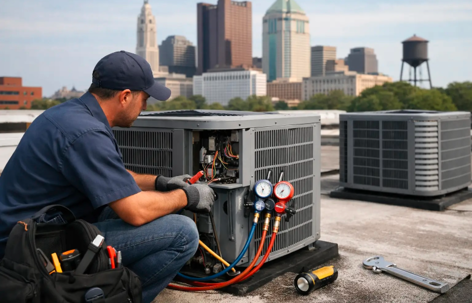
A furnace that quits at 2 a.m. in January feels different in Central and Southern Ohio than it does on a mild fall afternoon. The same goes for an air conditioner that stops during a July heat wave — when the house is full, the humidity is climbing, and indoor temperatures are no longer just uncomfortable but becoming unsafe. That is when emergency HVAC repair matters most. For homeowners across Central and Southern Ohio, it stops being a convenience call and starts being about health, safety, and protecting your home.
Not every heating or cooling problem is a true emergency, but some absolutely are. Knowing the difference helps you act quickly, avoid preventable damage, and get the right technician on-site without wasting time.
When Emergency HVAC Repair Is the Right Call
If your system has stopped working during extreme weather, the first question is not whether the equipment is old or whether the fix will be expensive. The first question is whether the failure creates a real risk for your family or your home.
A no-heat call in freezing temperatures can become urgent fast — especially in homes with infants, older adults, or anyone with a health condition. The same is true for no cooling during high heat, particularly when indoor conditions are affecting sleep, medical needs, pets, or vulnerable family members.
There are also system issues that should never wait until regular business hours. These include:
- Burning smells or electrical odors
- Visible smoke coming from the unit
- Loud metal-on-metal sounds or aggressive banging
- Tripped breakers that keep resetting
- Water leaking around indoor equipment
- Ice buildup tied to a system failure
That said, some problems feel urgent but can wait a few hours. Uneven temperatures, a noisy blower that is still operating, weak airflow, or a thermostat issue may not require overnight dispatch unless weather conditions or who is inside the home make the situation unsafe. It depends on the season, the home, and your family's needs.
What to Do Before You Call
A fast service call starts with a quick check of the basics. Sometimes a system appears dead when the problem is simpler than a failed compressor or cracked heat exchanger.
Start with the thermostat. Make sure it is set to the correct mode and temperature, and check the batteries if the screen is blank or behaving oddly. Then check the breaker panel. A tripped breaker does not always mean the system itself is bad — but repeated trips are a red flag and should not be ignored.
Next, look at your air filter. A severely clogged filter can choke airflow, contribute to freezing in cooling mode, and stress the system in heating mode. If the filter is packed with dust, replacing it may help restore operation. If you have a condensate drain issue around your air conditioner or high-efficiency furnace, check for obvious water overflow near the unit.
If you smell burning plastic, see sparks, or hear aggressive banging or grinding, shut the system off and call right away. Do not keep resetting it hoping it will push through. Running damaged HVAC equipment can turn a repair into a full replacement.
When you call, be ready to describe what the system is doing, when the issue started, what type of equipment you have, and whether anyone in the home has immediate health or safety concerns. That information helps prioritize the response and gets a technician on-site with the right expectations.
Why Central and Southern Ohio HVAC Emergencies Can Get Serious Fast
Central and Southern Ohio weather is part of the story. Winter cold snaps can put heating systems under heavy demand for days at a time, and summer humidity makes air conditioning failures feel worse than the thermostat reading alone suggests. A house at 80 degrees with high humidity becomes miserable quickly — and for vulnerable family members, it can become dangerous.
A home with no heat during freezing conditions can also start risking pipe damage, frozen drains, and secondary repairs that cost far more than the original HVAC problem.
Older homes across communities like Columbus, Lancaster, Chillicothe, Circleville, Washington Court House, and Wilmington add another factor. Many properties have aging ductwork, legacy equipment, electrical limitations, or add-on system components that make diagnosis more involved. That is why experience matters. Emergency work is not just about showing up quickly — it is about identifying the root problem under pressure and making safe decisions that protect your home long after the immediate crisis is over.
What a Dependable Emergency Response Looks Like
Homeowners want the same thing in an emergency: a clear answer, a practical plan, and no surprises.
A dependable emergency service experience starts with honest communication. If a part is available and the repair can be made right away, you should be told that. If the issue may require a temporary solution until a full repair or replacement can be completed, that should be explained clearly too. There is a big difference between a same-night capacitor replacement and a failed heat exchanger that changes the conversation entirely.
Good emergency technicians also look beyond the single failed part. If a blower motor burns out because airflow has been restricted for months, replacing only the motor without addressing the underlying cause may set you up for another breakdown. The same applies to frozen coils, ignition problems, failing contactors, low refrigerant conditions, and drainage issues. A quick fix is not always the right fix.
Repair Now or Replace Soon?
This is one of the hardest questions during an HVAC emergency because it usually shows up at the worst possible moment. The answer depends on equipment age, repair cost, part availability, energy performance, and how reliable the system has been leading up to the failure.
If your system is newer and the issue is isolated, repair is often the obvious move. If the unit is older, has a history of breakdowns, uses outdated refrigerant, or needs a major component, replacement may be the smarter long-term decision — even if a repair is technically possible.
There is no one-size-fits-all rule. A homeowner with an aging furnace in midwinter may choose replacement immediately to avoid repeated emergency calls. Budget matters too, and so does financing availability. The right provider should walk through your options without pressure and explain the trade-offs in plain language.
How to Lower Your Chances of Another HVAC Emergency
Most emergency calls do not come out of nowhere. Many are the result of wear that has been building for months. The system may have been short cycling, making new noises, running longer than usual, or struggling to maintain temperature before it finally quit.
Routine maintenance is the best defense. Seasonal tune-ups help catch weak electrical components, dirty coils, gas pressure issues, drainage problems, worn motors, refrigerant concerns, and airflow restrictions before they become after-hours breakdowns.
Homeowners can also help by:
- Changing filters on schedule
- Keeping outdoor units clear of debris
- Paying attention to new sounds or smells
- Not ignoring rising utility bills that suggest the system is working harder than it should
For Central and Southern Ohio families, local accountability matters here. A contractor with deep experience across the region is better positioned to spot patterns, recommend realistic next steps, and respond when time matters most.
Choosing the Right Emergency HVAC Partner
In an emergency, speed matters. So do licensing, insurance, technical range, and the ability to service more than one type of equipment — standard furnaces and air conditioners, ductless systems, heat pumps, and the system interactions that often complicate urgent calls.
You also want transparency. Emergency service should feel organized, not chaotic. The person answering the phone should understand urgency. The technician should communicate clearly. The recommendation should make sense for your home, not just the next invoice.
If you are dealing with a heating or cooling failure in harsh weather, trust your instincts. If the situation could affect safety or your home, do not wait and hope it resolves on its own.
Accurate Heating, Cooling & Plumbing has been serving homeowners across Central and Southern Ohio since 1977. We are locally owned, veteran-owned, and built on honest service. When your comfort system fails at the worst possible time, we answer the phone.
Call us at (740) 299-2629 or visit accuratehvac.com.